Showing posts with label Old Sewing Machines. Show all posts

Friday, 2 January 2026

Singer 28 sewing machine 1910


A little rough around the edges, but with a little oil and patience this 191O Singer 28 sewing machine turns smoothly without obvious signs of  wear. Amazing after 115 years!


Monday, 12 February 2024

Singer 128 1915


The second machine is a nice Singer 128. 

This well used machine comes complete with a manual and a receipt dated 4th of June 1915. Very special. 


Singer Twelve new Family 1898


Two Singer sewing machines were very kindly donated to the Rusty collection Sewing Machine section. The first is a Singer Twelve New Family, Manufactured in 1898, making this the latest of our three Twelves. 
There's a well worn manual with this machine and a hand-written letter dated 1955 with instructions how to use this old machine. 


Wednesday, 18 October 2023

Phoenix 38 sewing machine 1936

Here's a big and beautiful, but rough Phoenix 38 sewing machine manufacturered in 1936 by the Baer & Rempel Sewing Machine Company. This fairly large machine  was considered a medium type and could sew up to 4,500 stitches per minute. It is a double-cycle,rotary hook machine. 


Friday, 3 March 2023

Bell portable sewing machine by Mabel France

So what's in this small white plastic case? Could it be one of these small recordplayers for "singles", popular in the sixties? 
But there's a very special little sewing machine neatly packed in here.
It is called "Bell". Though the Bell Micro MB was produced in the USA in the fifties, this one was manufactured in France, according to the printing on the base plate: "Machine a Coudre Bell production MABEL France".  
This is not a toy, but a fully functional sewing machine. The design is very pretty, with hints of streamlining in a lovely shade of green. The little metal table can be removed to convert to a free arm.   
All the writing on the machine is in French. This dial selects reverse and forward stitching. 
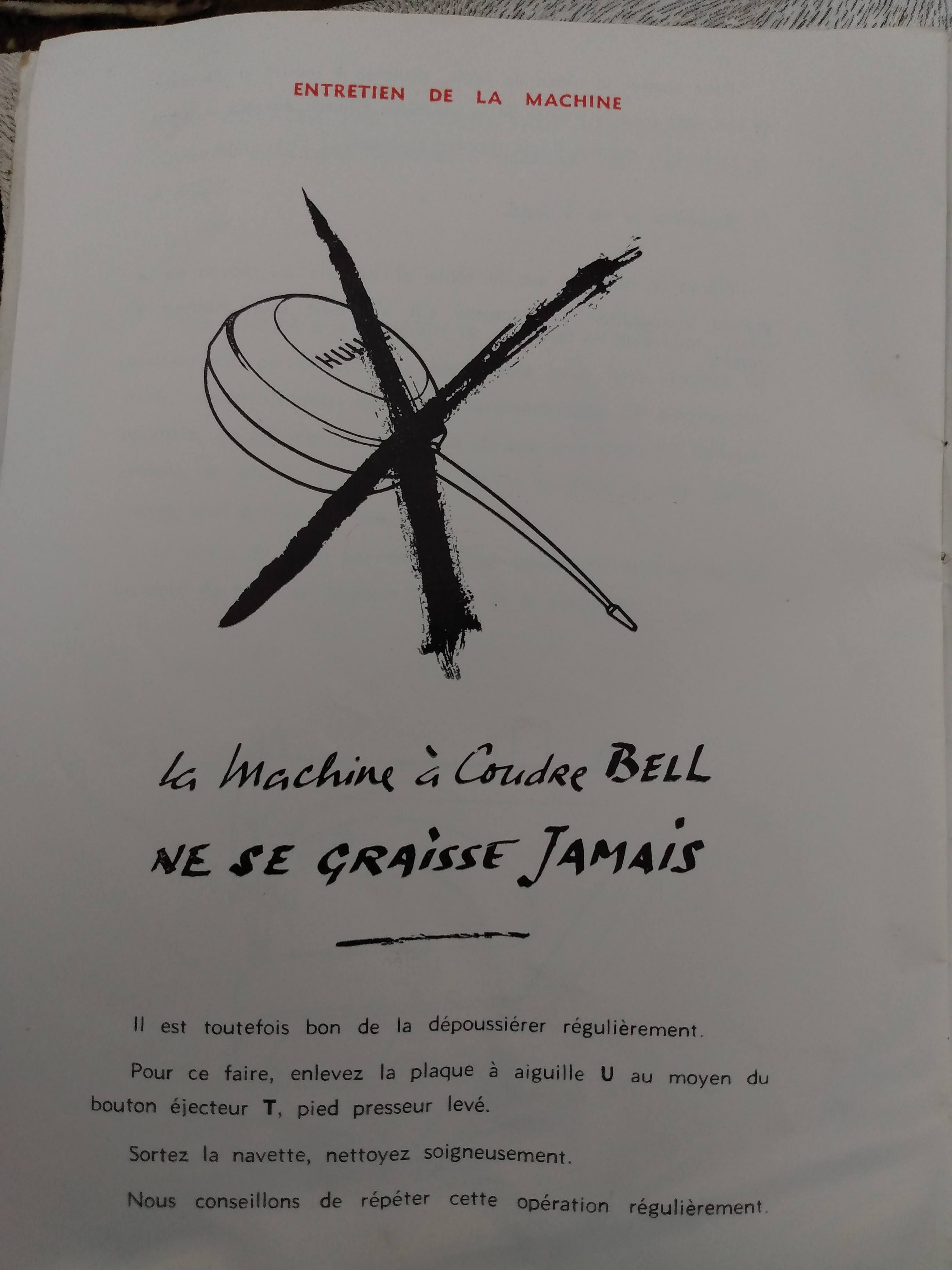
The manual is also in French. Maintenance? This page tells you to never use grease anywhere on this machine. 
Is it a ring for your lady? No this is the tiny bobbin case. The plastic bobbin is even smaller. I read the Singer 29 bobbin is about the same size. Very strange as the 29 is a huge machine.  
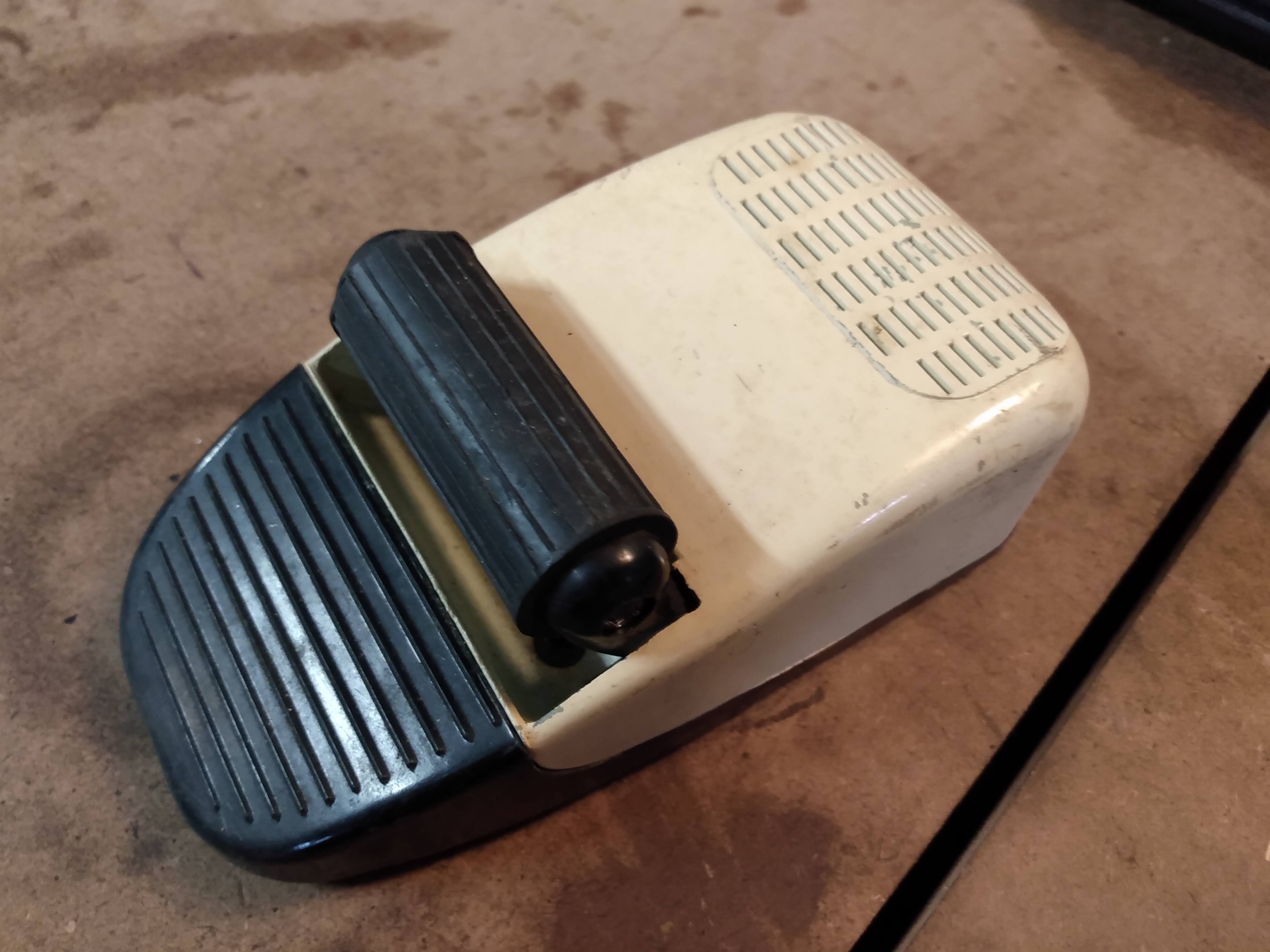
The pedal is a sturdy device, the actual pedal is a roller. Interesting. 
The American origins of the Bell show in this adaptor from 220 v. to 120v. 
Maybe this is a later addition as I also read that mains power was normalised from around 127v. to 220v. in 1956. 
This is on the base of the machine. "Machine a Coudre Bell production MABEL France".  

Sadly this Bell does not work at the moment. This is the main cog that transfers drive from the motor to the mechanism. 
It will be a little project to get this cute little machine sewing again. 


Friday, 17 February 2023

Singer 221k featherweight Centennial Badge sewing machine. 1950/1951


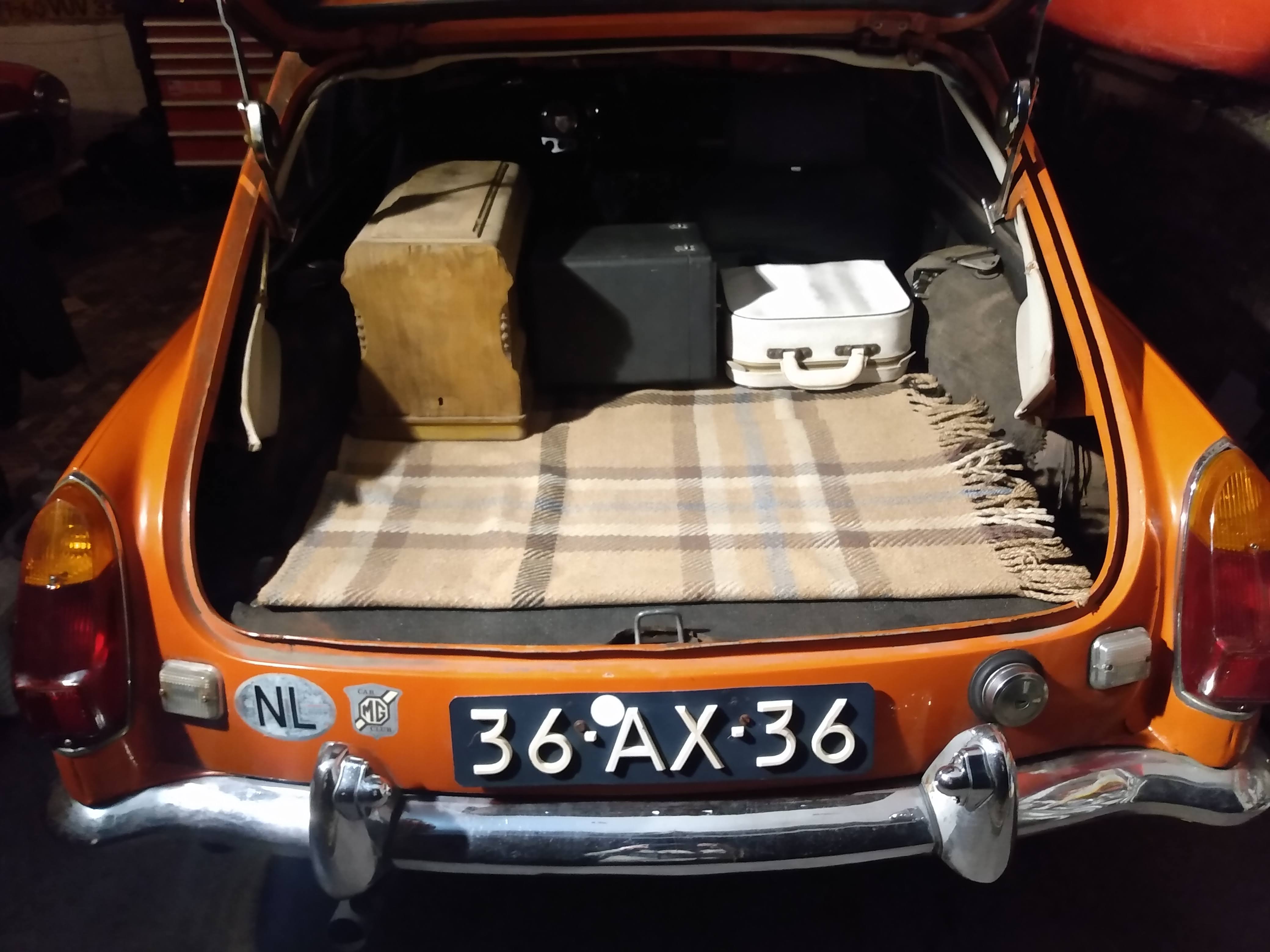
In the second, slightly smaller black box we carried home in the MG last week, was nothing less than a Singer 221k featherweight.  This is a very special machine.

It is different from the other Singers. Very small and very capable. I think I'm very lucky to be the custodian of such an Iconic sewing machine. 
When you open the box, the first thing you see are the accessories neatly packed in a tray. It is all there!
 
Even a (French) user manual. 
Under the tray the sewing machine is safely ensconced between four pillars supporting the tray.
Next to the machine there is a pretty oilcan neatly clipped to a plinth.  
This machine looks to be in good condition. The black paint is shiny and the decorations and script are all still very nice. Also the mechanism turns freely. According to the serial number, this machine was manufactured in 1950, but there is a very nice badge celebrating a century of sewing service from 1851 to 1951. This is known as a Centennial Badge. Reading about this I found this badge celebrates 50 years of sewing machine production by Singer, but the badges were sometimes mounted on slightly earlier machines, but oddly not all 1951 machines received the badge. 

I gave the machine a first clean and put some new oil in the oiling holes. Everything seems to be moving freely, so now we can connect the power cord and pedal.  With the power on and the light came on. It' s alive!
The motor works well and we'll clean and oil some more later. I expect we'll be sewing with this machine soon!  
Here you can compare the General Electric Sewhandy and the Singer Featherweight.  
As you can see, these two machines look very similar. I admit I'll need to read more about the Featherweight, but it seems they are related.
   
According to Wikipedia there is a reason for the similarity of the Singer Featherweight and the General Electric Sewhandy:  
"The first sewing machine designed for portability, with a completely enclosed movement, was invented in 1928 by Raymond Plumley and Richard Hohmann, engineers for the Frederick Osann Company, who took advantage of then-recent advances in alloy technology to create a machine housed in a lightweight cast aluminum body. Osann subcontracted manufacture and assembly to the Standard Sewing Machine Company of Cleveland, Ohio, which marketed the machine under a number of brands, including Osann, Standard, and General Electric.
Both companies encountered financial difficulties as the Great Depression worsened; Osann was acquired by Standard, which was in turn acquired by the Singer Manufacturing Company. Singer continued production of the Sewhandy under the Standard brand through the early 30s while working on an improved design, which would be introduced as the Model 221 during the 1934 World's Fair. Like the Sewhandy, the 221 featured aluminum construction and small size, weighing only 11 pounds (5.0 kg), as well as an improved self-fastening bobbin case which simplified the design of the machine's bobbin driver." (full article here)